How to Use Happy Mother's Day PNG Clipart in Your Creative Workflow
When you are preparing for Mother's Day projects, having the right visual assets can determine how smoothly your work proceeds and how polished the final result looks. A Happy Mother's Day PNG clipart file offers a flexible starting point for a wide range of outputs, from printed items to digital content. Understanding what this file type is, how it differs from other formats, and where it fits into a broader production process helps you use it effectively without unnecessary frustration.
This article walks through the practical aspects of working with Happy Mother's Day PNG clipart, covering preparation, integration into various workflows, compatibility considerations, and long-term organisation strategies. Whether you are designing products for sale, creating personal gifts, or producing content for a blog or social media, these insights help you move from file to finished piece with less friction.
What a Happy Mother's Day PNG Clipart File Actually Is
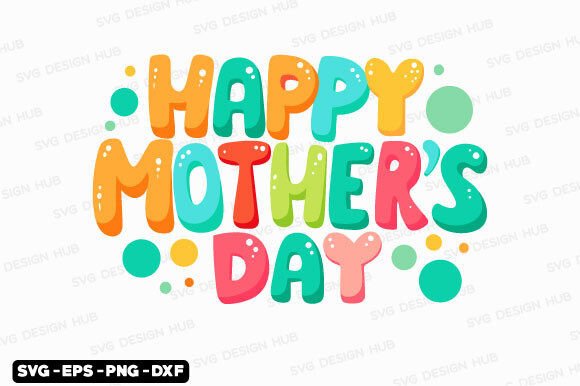
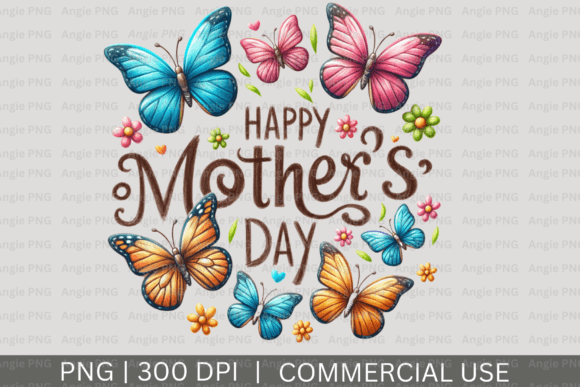
A PNG file with a transparent background means the graphic has no white or coloured box around it. When you place it into a design, only the illustrated elements appear, which saves time compared to manually removing backgrounds. This particular clipart is intended for use in applications like t-shirt layouts, bag designs, sublimation transfers, greeting cards, digital scrapbooks, invitations, and blog or web graphics. Because it is a PNG, you can resize it to fit your canvas without losing the transparency feature. However, it is not an SVG file and cannot be treated as one. SVG files are vector-based and scale infinitely without quality loss, while PNG files are raster-based and have a fixed resolution. Knowing this distinction upfront prevents workflow errors later.
The file comes as a single graphic element, not a layered editable document. That means you should plan to use it as a finished piece rather than something you modify heavily at the node or path level. If you need to change colours or shapes drastically, you would need software capable of raster editing, such as a bitmap editor with selection and colour adjustment tools.
Where This Clipart Fits in a Broader Creative Process
Integrating a Happy Mother's Day PNG clipart into your work involves several stages, and the file plays a role before, during, and after the core design work.
Before the Project: Planning and Asset Preparation
Before you open any design software, consider the end use. Will this graphic go on a dark t-shirt, a light bag, a printed card, or a website header? The answer determines whether you need to adjust contrast, add an outline, or pair the clipart with a background colour. Since the PNG has a transparent background, it layers easily onto any backdrop, but you still need to think about visibility. A delicate pastel design may disappear on a white substrate, while a dark graphic might dominate a soft background.
Check the file resolution at this stage. If you plan to print at a large size, open the PNG in your software and zoom to the actual output dimensions. If it becomes pixelated, you may need to source a higher-resolution version or use the clipart at a smaller scale. Resizing up too much degrades quality, and resizing down is generally fine. Understanding these limits before you build a layout saves rework.
During the Project: Integration and Composition
When you bring the clipart into your design software, treat it as a layer. Because the background is transparent, you can place it above or below other elements, rotate it, scale it, and combine it with text or additional graphics. This is where the file interacts with your tools. Most graphics applications, including Adobe Photoshop, Affinity Photo, GIMP, Canva, and Procreate, support PNG files with transparency. If you work with print-on-demand platforms like Printful or Printify, you can upload the PNG directly as a design layer.
For sublimation projects, the transparent background allows the clipart to fuse cleanly onto coated surfaces without white halos. For digital scrapbooking, you can stack multiple PNG elements to create depth without visible edges. For blog graphics, the clipart can sit over a photograph or a solid colour block without extra masking work.
One practical observation: when you resize the file, maintain the aspect ratio by holding the shift key (or equivalent) in your software. Distorting the image looks unprofessional and cannot be easily corrected later. Also, save your working file in the native format of your software (PSD, AFPHOTO, etc.) before exporting final versions. This gives you a fallback if you need to adjust the clipart placement later.
After the Project: Export, Review, and Delivery
Once your design is complete, export it in the format required by your output method. For print, use CMYK colour mode if your printer or manufacturer specifies it, and export as PDF, TIFF, or high-quality JPEG. For web use, sRGB colour mode and PNG or JPEG are standard. The original clipart may be in RGB, so if you switch to CMYK for printing, expect some colour shift. Print a test sample if colour accuracy matters.
Quality control at this stage involves checking that the transparent edges of the clipart are clean. Sometimes compression artifacts or aliasing can create faint outlines. Zoom in on the boundaries where the clipart meets the background to ensure there are no stray pixels. If you see issues, clean them up in your editing software before finalising.
Practical Use Cases and Workflow Examples
Let's look at a few specific scenarios to see how the clipart integrates into real processes.
Example 1: T-Shirt Design for a Small Print-on-Demand Shop
You run a small apparel brand and want to release a Mother's Day collection. You download a Happy Mother's Day PNG clipart with a floral motif. You open your mockup generator or design software, upload the PNG as a new layer, and place it on a blank t-shirt template. Because the background is transparent, the graphic appears directly on the fabric texture. You add a short text line below it using your chosen font. You export the final mockup as a PNG and upload it to your print provider. The clipart integrates seamlessly because you did not need to cut out a background or adjust edges. The entire process from download to upload takes under ten minutes for a single design.
Example 2: Digital Scrapbook Layout for a Personal Gift
You are creating a digital scrapbook for your mother. You have a collection of family photos, and you want to add decorative elements. You import the clipart into your scrapbooking software (or a general design tool) and position it in the corner of a page. Because it is a PNG, it sits over the photo without blocking it entirely. You can duplicate the clipart, resize each copy, and scatter them across pages for a cohesive theme. The transparent background lets you overlay the clipart on patterned backgrounds or gradients without ugly edges. This workflow relies on the file's transparency and the ability to scale each instance independently.
Example 3: Blog Post Header for a Mother's Day Article
You manage a lifestyle blog and need a featured image for a Mother's Day post. You open Canva or Photoshop, create a 1200x630 pixel canvas (standard for social sharing), upload the clipart, and place it on a background colour that matches your brand palette. You add the post title. Because the clipart has no background, you can position it off-centre, overlap it with text, or apply a soft shadow effect. You export as PNG or JPEG and upload to your CMS. The process is efficient because you skip the step of removing a background from a JPEG or dealing with a complex vector format.
Compatibility and Software Considerations
This PNG clipart works with any program that supports PNG files with alpha transparency. That includes most design software, office applications, and online editors. However, not all programs handle transparency identically. In Microsoft Word or PowerPoint, for example, transparent PNGs display correctly on screen but may export differently when printed. Test your output before producing in quantity.
If you use web design tools like Figma or Sketch, the PNG imports as a bitmap layer. You can apply effects like drop shadows or gradients to the layer itself, but you cannot edit the clipart's internal elements individually. If you need that level of control, you would need a vector or layered file format instead.
For sublimation, ensure your software prints with transparency enabled. Some basic print drivers flatten transparency to white, which defeats the purpose. Check your print settings and, if necessary, convert the design to a format that preserves transparency for your specific printer model.
Colour variation between devices and printers is an important factor. The clipart may appear differently on your monitor, your phone, and your manufacturer's printer. Calibrate your monitor if colour matching is critical, and always request a proof or print a sample before running a full batch.
Organising and Storing Clipart for Long-Term Use
If you collect multiple clipart files, develop a simple naming convention. Instead of generic names like mothersday.png, use descriptive tags such as 2025_mothersday_floral_pink_transparent.png. This helps when you search for assets later. Store files in a dedicated folder on your cloud drive or local storage, and back them up. PNG files are comparatively small, so you can keep a library of dozens or hundreds without performance issues.
Consider creating a thumbnail index or using asset management software like Adobe Bridge, Eagle, or even a simple spreadsheet with file names and descriptions. This becomes valuable when you reuse the same clipart across multiple projects or years. A Mother's Day graphic from one season might work for a different occasion with slight colour adjustments, and being able to find it quickly speeds up future projects.
Common Pitfalls and How to Avoid Them
Several issues can arise when working with PNG clipart, and knowing them in advance helps you stay efficient.
- Mistaking PNG for SVG: As noted, this is not a vector file. Do not try to scale it beyond its native resolution or edit it as if it were a path-based graphic. If you need a vector version for large-format printing, look for an SVG or EPS source.
- Ignoring resolution limits: A small PNG file will not produce a sharp large print. Check the pixel dimensions before you invest time in a layout. If the file is 500x500 pixels, it works for a card or a social media graphic but not for a poster or a large bag.
- Overwriting the original file: Save a copy of the original clipart in a secure location. Never edit the original file directly. Duplicate it and work on the copy. This preserves the source asset for future projects.
- Assuming colour consistency: The colour you see on screen may not match the printed product. Test prints are not optional if colour accuracy matters to your client or your brand.
- Using the clipart in a context that requires editing: If your design demands significant reshaping or recolouring, a PNG clipart may not be the best choice. For heavy modification, consider vector graphics or layered source files.
Practical Observations for a Smoother Workflow
One of the strengths of a transparent PNG clipart is the speed it brings to production. You avoid the most time-consuming part of working with images: isolating the subject from its background. This means you can prototype multiple design variations quickly. Try placing the same clipart on different backgrounds, with different fonts, and at different sizes to see what works best without committing to a single direction early.
If you sell products, you can use the same clipart across multiple product types. A design that works on a t-shirt may also suit a tote bag, a mug, or a greeting card. Because the file is a PNG, you can drop it into each product mockup with minimal adjustment. This creates a cohesive product line efficiently.
For educators and bloggers, the clipart can serve as a visual anchor in instructional content. If you write a tutorial about creating Mother's Day crafts, the clipart can appear in the featured image, in step-by-step illustrations, and as a downloadable resource for readers. Consistent visuals build trust and recognition.
Finally, remember that the tool is only part of the process. Having the right file does not guarantee a good design. Take time to consider composition, typography, colour harmony, and the message you want to convey. The clipart supports your vision, but thoughtful planning and execution make the difference between a generic product and something that resonates.
By understanding the nature of a Happy Mother's Day PNG clipart, its place in a project timeline, its compatibility with various tools, and the practical steps for using it effectively, you can integrate it into your workflow with confidence. The result is less time troubleshooting file formats and more time creating work that connects with its intended audience.