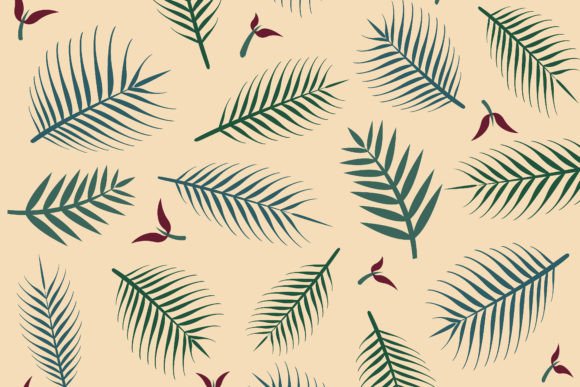
Leaves in Pattern Vector Illustration
When you encounter a file titled Leaves in Pattern Vector Illustration, you are looking at a digital design asset built around repeating botanical motifs. This particular asset comes in two standard formats: an EPS file sized at 2000 x 2000 pixels and a JPEG file sized at 4000 x 2667 pixels. Understanding what this product offers, how it performs across different uses, and where it fits into your creative workflow can help you decide whether it aligns with your project goals. This article walks through the practical considerations, strengths, and limitations of this vector illustration so that you can evaluate it on its own terms.
What Is Leaves in Pattern Vector Illustration?
At its core, Leaves in Pattern Vector Illustration is a digital graphic file that contains a repeating arrangement of leaf shapes, arranged in a deliberate, often symmetrical or rhythmic pattern. The vector format (EPS) means the artwork is defined by mathematical paths rather than fixed pixels, which allows it to scale to any size without losing sharpness. The accompanying JPEG version provides a high-resolution raster preview or ready-to-use image at 4000 pixels on its longest side.
Because the design is built as a pattern, it repeats seamlessly when tiled, making it suitable for covering surfaces, fabric prints, or digital backgrounds. The motif itself centers on leaves, which can range from stylized silhouettes to more detailed botanical renderings, depending on the specific illustration. For anyone working in print, web, or product design, this kind of asset offers a ready-made decorative foundation that can save hours of manual pattern creation.
Why Someone Might Be Interested in This Asset
Interest in Leaves in Pattern Vector Illustration typically stems from a need for nature-inspired visuals that are consistent, scalable, and easy to integrate into a project. Graphic designers, print-on-demand sellers, crafters, and content creators often look for pattern files that do not require them to build a repeating motif from scratch. The leaf theme appeals to those working on branding for organic products, wedding invitations, home décor, or seasonal marketing materials.
Another reason for interest is the dual file format. The EPS vector can be opened in professional software such as Adobe Illustrator, CorelDRAW, or Affinity Designer, allowing users to edit colors, adjust scale, or extract individual elements. The JPEG file, meanwhile, serves as a high-quality copy for quick use in applications that do not support vector files, such as word processors or simpler photo editors. This flexibility means the same pattern can move between different stages of a workflow without needing a format conversion step.
Benefits and Practical Strengths
One major benefit of Leaves in Pattern Vector Illustration is its scalability. Because it is a vector file, you can enlarge it for a billboard or shrink it for a business card without any pixelation or degradation. This is especially valuable if you are printing on physical products where size requirements vary. The EPS format retains crisp edges and solid colors, which is essential for professional-looking output.
Another advantage is the seamless repeat. A well-constructed pattern tile means you can place the design side by side and the joins will be invisible. This makes the file practical for wrapping paper, fabric rolls, or wallpapers, where continuity across the surface matters. For anyone selling products through print-on-demand services, a seamless pattern reduces the risk of visible seams that can make a product look amateurish.
The file sizes provided are also worth noting. The 2000 x 2000 EPS tile is large enough to produce high-quality prints up to poster or small wall art sizes, while the 4000 x 2667 JPEG offers an even larger canvas for desktop wallpaper or larger format prints. Having both options means you can choose the version that best matches your output medium without unnecessary file overhead.
Tradeoffs and Considerations
No asset is perfect for every scenario, and Leaves in Pattern Vector Illustration comes with its own set of tradeoffs. The most significant is that you are working with a pre-made pattern. While you can modify colors and scale in a vector editor, you cannot change the underlying arrangement of leaves without more advanced vector editing skills. If your project requires a specific leaf shape, a different repeat size, or a particular color palette that differs radically from the original, you may find the file limiting.
Another consideration is the aesthetic style. A vector illustration of leaves can range from minimalist and modern to detailed and ornamental. If your brand or project calls for a photographed, textured, or hand-drawn look, a clean vector pattern may feel too geometric or flat. The smooth gradients and solid fills typical of vector graphics suit certain applications well, but they may not provide the organic imperfection that some natural themes demand.
File compatibility is another factor. The EPS format is widely supported, but not all software handles it equally. Some online design tools or mobile apps may struggle to parse EPS files correctly, meaning you might need to rely on the JPEG version for those platforms. This raster version, while high-resolution, will not scale beyond its native 4000 x 2667 pixels without losing quality. If you plan to print at very large sizes, such as a 4-foot poster, the JPEG may show visible pixels when viewed up close.
Expectations for Use Cases
When you download Leaves in Pattern Vector Illustration, you should expect a file that is ready to be placed into a design project with minimal adjustment. The pattern will tile consistently, and the vector paths will be clean and editable. For desktop wallpaper, the JPEG version can be set as a background image directly, and you can crop or scale it to fit your screen resolution. For mobile wallpaper, the 2000 x 2000 EPS tile can be exported to any size that matches your device’s aspect ratio.
For physical products, the file is designed to be printed. Cards, frame artwork, scrapbooks, t-shirts, pillows, bags, mugs, stickers, and similar items can all benefit from this pattern. On fabric, the seamless repeat ensures the design continues across seams without abrupt breaks. On rigid surfaces like mugs or phone cases, the pattern can be wrapped or centered as needed. However, you should consider the color profile: vector files typically use RGB, so you may need to convert to CMYK for professional offset printing to ensure accurate color reproduction.
One expectation to keep in mind is editing complexity. Changing the colors of the leaves or background in a vector editor is straightforward if the file is well-organized with named layers and grouped objects. If the file arrives as a single merged object, color changes become more difficult. It is worth checking the file structure if you plan to make modifications.
Situations Where It Is a Strong Fit
Leaves in Pattern Vector Illustration is an excellent choice when you need a nature-themed background or surface pattern quickly. If you are a print-on-demand seller launching a new line of botanical products, this pattern can be applied across multiple items to create a cohesive collection. The consistency of a vector pattern helps maintain brand uniformity across apparel, home goods, and stationery.
It is also a strong fit for digital content creators who need wallpapers, social media templates, or video backgrounds. The high-resolution JPEG works well for YouTube thumbnails, Zoom backgrounds, or Instagram story graphics. Because the pattern is seamless, you can use it as a fill for text frames or shapes without awkward edges.
For crafters and DIY enthusiasts, the file offers a starting point for physical projects. Printing the pattern on adhesive paper yields custom stickers, while using iron-on transfer paper allows you to add it to textiles. The scalability means you can adjust the size of the pattern elements to match the scale of your project, whether that is a small gift tag or a large tote bag.
Event planners and invitation designers may also find it useful. A leaf pattern can serve as an elegant background for wedding invitations, save-the-date cards, or thank-you notes. The vector format ensures that text overlaid on the pattern remains crisp and readable when printed professionally.
When Alternatives May Be Worth Considering
Despite its strengths, there are scenarios where Leaves in Pattern Vector Illustration may not be the best fit. If you need a pattern that tells a specific story—such as a particular species of leaf, a seasonal arrangement, or a hand-painted aesthetic—a generic vector pattern may feel impersonal. In that case, commissioning a custom illustration or using a photographed leaf texture could yield more unique results.
If your project involves very large-scale printing, such as a trade show backdrop or building wrap, the 4000 x 2667 JPEG may not provide sufficient resolution. While the EPS vector can scale infinitely, the output quality still depends on your printer’s capabilities and the complexity of the design. For such applications, a pattern with simpler vector geometry may render more cleanly than one with many fine leaf details.
Another alternative worth considering is a pattern set that includes multiple colorways or variations. If you are designing a collection with several products that need to coordinate but not look identical, a single pattern file will not offer that versatility. Some sellers bundle multiple color versions of the same leaf pattern, which can give you more options without buying separate files.
Finally, if you work primarily in mobile apps or web-based design tools that lack robust vector support, the EPS file may be difficult to use. In that case, a PNG pattern tile with a transparent background could be more accessible. The JPEG version provided here is a raster image, so it works in most software, but it does not have a transparent background, which can limit its use in layered compositions.
Practical Decision-Making Insights
To determine whether Leaves in Pattern Vector Illustration aligns with your goals, start by clarifying your output medium. If you are printing on physical products, confirm that your printer accepts EPS files or that you can export to a suitable format. If you are designing for digital screens, the JPEG version will likely suffice, but test it at your intended resolution to ensure the pattern does not appear too busy or too sparse.
Color flexibility is another decision point. If you need a pattern that matches a specific brand palette, verify that you can recolor the vector file easily. If you cannot edit the colors, the pattern may clash with your existing materials. Some vector files include swatches or global colors that make updating the palette a one-click process, which is ideal for branding consistency.
Consider the scale of the pattern relative to your product. A leaf pattern that looks balanced on a phone case may feel overwhelming on a throw pillow. You may need to scale the tile up or down in your design software. The EPS format allows this, but you will need to test the visual density on your actual product mockup.
Budget also plays a role. Pre-made vector patterns are generally affordable compared to custom design work. If your project has a tight budget and a short timeline, a ready-made asset like this one can deliver professional results without the expense of a designer. However, if your project requires exclusivity or a very specific visual identity, the money spent on a custom pattern may be justified.
Finally, think about long-term use. If you plan to use this pattern across multiple products or marketing materials for a seasonal campaign, the file offers good value. If you need the design to remain fresh for years, a botanical pattern is relatively timeless, but you should ensure it does not become overused in your niche.
Determining Alignment with Your Needs
Deciding whether Leaves in Pattern Vector Illustration is right for you comes down to a balance between convenience and specificity. If you need a botanical pattern that is ready to use, scalable, and compatible with both print and digital workflows, this file provides a solid foundation. The dual EPS and JPEG formats give you flexibility, and the leaf theme appeals to a broad range of natural and organic aesthetics.
On the other hand, if your project demands a pattern with a unique arrangement, a specific color story, or a more textured, organic appearance, a pre-made vector may not satisfy those requirements. In that case, you would be better served by a custom illustration or a photo-based pattern that captures the imperfections of real leaves.
The most practical approach is to evaluate the file in the context of your specific use case before purchasing. Look at the preview images closely to assess the leaf style, the density of the pattern, and the color palette. Consider whether the seamless repeat will work across the dimensions of your intended product. If the file meets those criteria, it can be a time-saving and cost-effective addition to your design toolkit.
Ultimately, Leaves in Pattern Vector Illustration offers a balance of quality, convenience, and versatility that suits a wide range of projects. By understanding its strengths and limitations, you can make an informed decision that aligns with your creative goals and practical needs, whether you are producing wallpaper for a digital device or printing a pattern onto fabric for a handmade product.